
Your crews are there to build sites. Not wait for freight.
Qualified installation crews are hard to schedule and harder to replace. When equipment arrives late, incomplete or on the wrong day, they wait, or come back, instead of moving on to the next site. Graham plans each delivery around the installation window and helps identify problems before they reach the site.
Supporting telecom deployment freight for Ericsson, T-Mobile and Nokia.
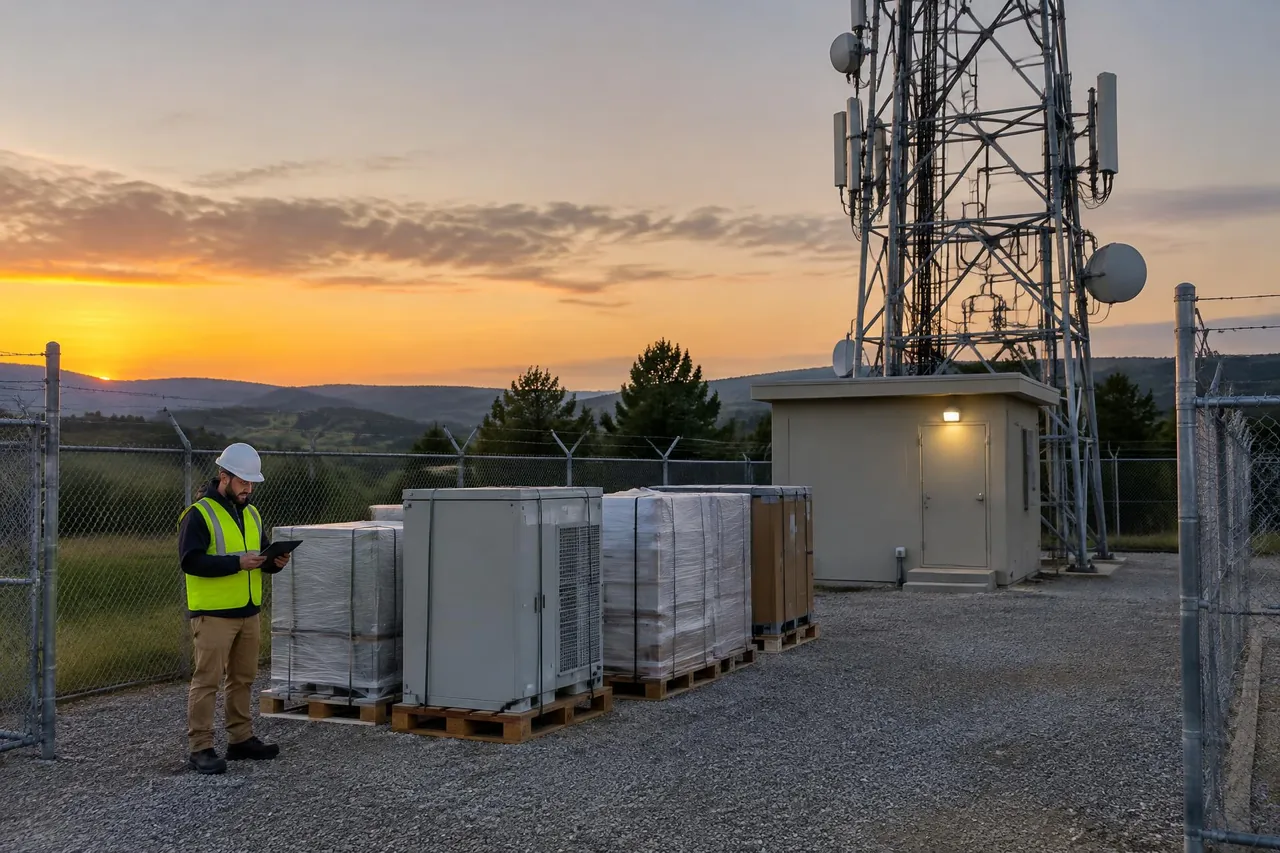
More than 10 years supporting Ericsson
Started with one in-transit merge, built to keep crews from waiting on incomplete sites
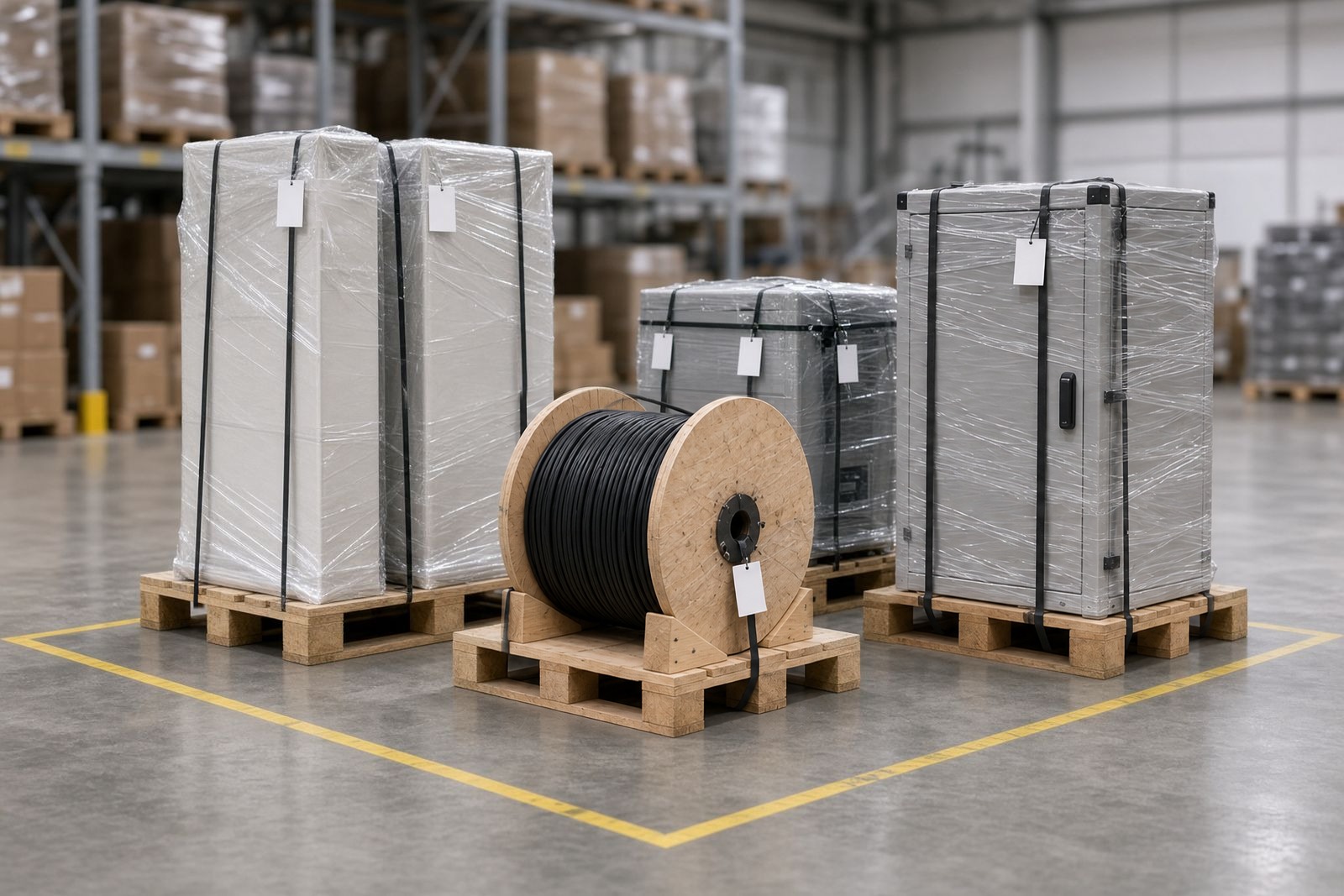
Each site's order comes together in a CRST Specialized project warehouse before it ships
General telecom freight through GlobalTranz
Project warehousing and specialized final mile through CRST Specialized, which Graham represents as an authorized agent. General telecom freight through GlobalTranz, for which Graham is a brokerage agent.
The real cost of a missed delivery is the next site that doesn't get built.
Installation crews are one of the biggest constraints on a network build. When equipment is missing or late, the crew loses productive time. It may have to come back to the same site instead of moving on to build the next one.
Before the in-transit merge on our Ericsson work, a couple dozen suppliers each shipped their own pieces. They arrived on different days and crews waited on incomplete sites. When equipment misses the crew, the customer pays, and those resources are constrained and hard to reschedule.
Then the rest stacks up:
- A repeat visit to the same site
- Equipment rentals, like a lift or crane, booked twice
- A site window that has to be rescheduled
- A turn-up or cutover date that slips, and the sites behind it
Plan. Receive. Merge. Schedule. Deliver.
You're buying certainty that the crew and the equipment meet at the site. Transportation is how we deliver it.
On programs built for it, the pieces from every supplier come into one warehouse first and leave as one shipment for each site. That's an in-transit merge. Other telecom freight is planned and routed the same way, without the merge.
- 01
Plan
Before anything ships, we work through what each site needs: the equipment, which suppliers ship it, whether the site is ready, who will receive it and the installation window. Then we route each move for efficiency.
- 02
Receive
On merge programs, equipment from each supplier comes into one warehouse ahead of the deployment, instead of shipping separately to the site.
- 03
Merge
The site's order comes together into one shipment, so missing pieces can be found in the warehouse, before they reach the site.
- 04
Schedule
The delivery is set to the site's installation window and receiving contact before it leaves, not after pickup.
- 05
Deliver
To the site in the window the crew needs, with specialized handling where the site requires it.
Crew starts on schedule.
We represent CRST Specialized, an asset-based carrier. As an authorized CRST agent, we build programs around their fleet, network and warehouses. Through our GlobalTranz relationship, we offer managed transportation and enterprise brokerage. Graham tells you which platform each shipment runs on, and you have one contact across both.
Where telecom deployments break
Pieces arrive from different suppliers on different days
The site has half an order and a full crew.
The delivery appointment comes after pickup
The freight is moving, and the site isn't ready to take it.
The wrong receiver is on the order
The carrier gets turned away at the gate.
An extra pallet nobody mentioned
The truck was booked for the equipment, not what came with it.
Site access changed after dispatch
The truck is on time. It can't get to the equipment pad.
No one is there to receive
Remote sites don't have a dock or a person waiting.
Also part of telecom work
- Decommissioning. Equipment coming off sites, routed back to the right return center or depot, and picked up without crating where it can be padded, strapped and secured in the truck.
- When a site is down. Graham has moved generators to telecom sites during outages, and every active shipment has an after-hours contact.
- Difficult sites. Graham has used cranes, helicopters and other equipment to reach difficult sites.
Your team already runs deployments. Keep what works.
Keep your suppliers, your site plan and the carriers you use now. Graham works alongside that setup and adds a checkpoint before the site, to help catch a missing piece or a moved date before the crew is standing there.
Start with one market, one wave of sites or one equipment program.
Frequently asked questions
Does Graham install or integrate the equipment?
No. Your crews or your integrator install and turn it up. Graham's job is to get the equipment to the site in the window the crew needs it, so crew time goes to building.
What is an in-transit merge?
Instead of each supplier shipping its piece straight to the site, the pieces come into one warehouse first. They're compiled into a single order for that site and delivered just in time. It's how the Ericsson work started.
Can you catch every missing piece before it ships?
No one can promise that. On merge programs, the site's order comes together in the warehouse first, so most problems can be found there, before the crew is standing at the site.
Can you reach remote or hard-to-access sites?
Site access and site complexity are where telecom deliveries break most, so they're planned before the truck leaves. Graham has used cranes, helicopters and other equipment to reach difficult sites.
Do I deal with two companies?
You get one Graham contact. Each platform has its own agreement and its own invoice, so a program that uses both CRST Specialized and GlobalTranz has two agreements and two invoices. Graham tells you which platform each shipment runs on.
Do we have to move our whole program?
No. Graham can work alongside what you run today. A first engagement can be one market, one wave of sites or one equipment program, scoped in detail before the first load moves.
Let's talk about your deployment.
Tell us what you're deploying, how many sites and when the crews are scheduled. We'll get back to you within 2 hours during business hours, 8 a.m. to 5 p.m. Central.
Not ready to talk? Read the Ericsson program story.