
The situation
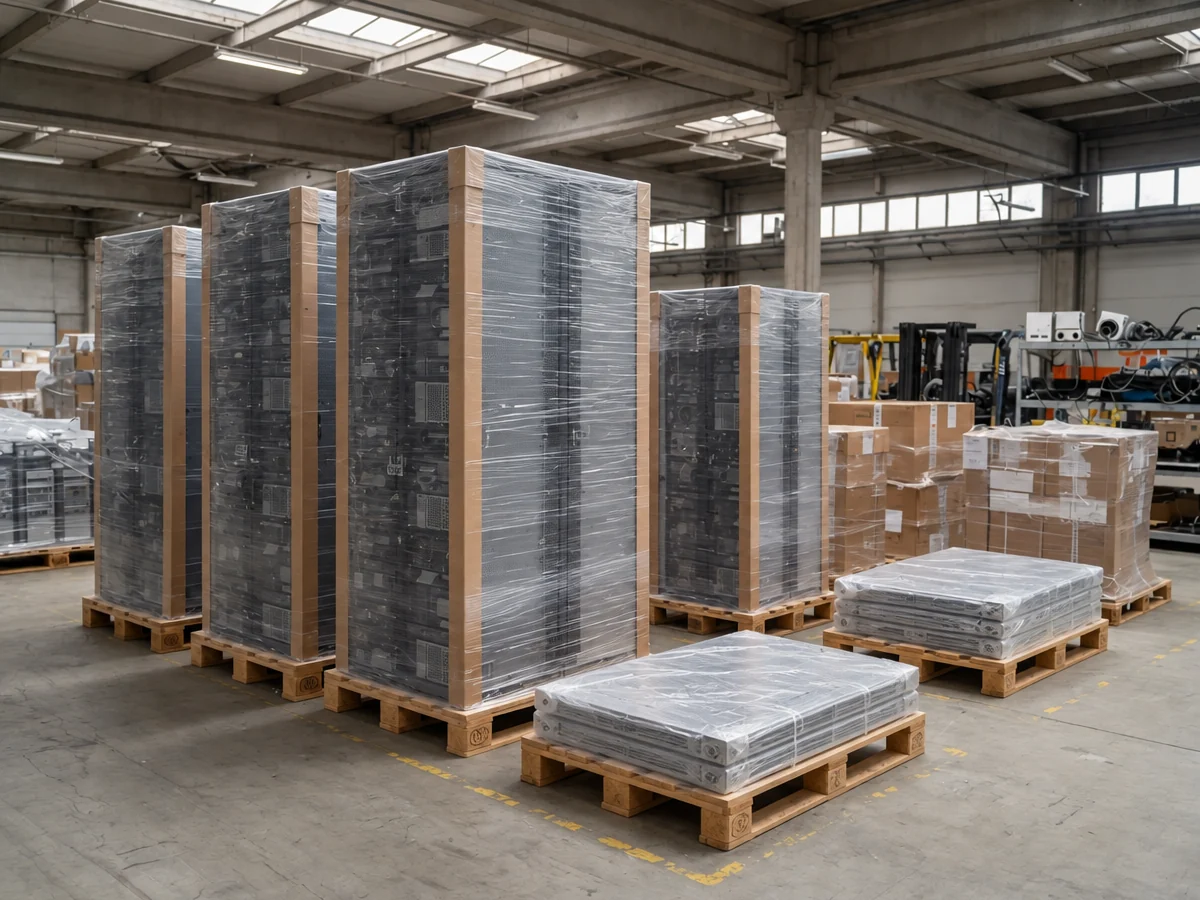
The customer found a new line of business: it buys commodity hardware, configures it into data center racks and sells those racks to hyperscalers. Demand is strong.
The work had no home. The in-house options didn't scale, or carried an internal cost that made the deal unworkable. And the two hyperscalers want different things. One wants the build kept in the United States for now. The other is fine with configuring across the border and shipping north. Same product, two logistics designs.
What was at stake
The business itself. Without a place to receive, track and assemble the material at a workable cost, the deal didn't work.
What Graham did
Graham split the work by what each organization is built to do. The customer acts as a value-added reseller to both hyperscalers, and Graham supports that for each.
- Warehousing and order assembly, through CRST Specialized. We represent CRST Specialized, an asset-based carrier. CRST tracks material to the box level so the customer can see what's missing, assembles every component of a complete order, moves to a pallet unit of measure where that cuts handling cost, and delivers locally just in time, including white-glove inside delivery.
- Moving the material, through GlobalTranz. Through our GlobalTranz relationship, we offer the intermediate transportation of the sourced material and a lower-cost standard final mile.
The outcome
One relationship, two specialized logistics solutions, and no overlap between them. One Graham contact sits across both, and the customer is comfortable with that. The business is live today and growing.
The lesson
Split the work by what each organization is built to do. Storage and value-added assembly go to the organization built for them, moving freight goes to the one built for that, and the customer keeps a single point of accountability.