
Freight Consolidation: Bring the Order Together Before It Reaches the Site
Freight consolidation usually means saving on freight. For installs, it means one complete delivery: every supplier's pieces checked together before it ships.
By Graham Logistics Services
Most people searching for freight consolidation want to cut shipping costs: combine smaller shipments into fuller loads and pay less per pound. That's a real benefit. But when the freight is going to an install, consolidation solves a different and more expensive problem.
An install needs everything. A telecom site, a robot cell or a row of racks comes from several suppliers, and each one ships on its own schedule. When the pieces travel separately, they arrive separately. The crew shows up to a site that has most of what it needs, and most isn't enough.
Half a system can't be installed
A partial delivery looks like progress on a tracking screen. On site, it's a crew with nothing to finish. The cost lands in places the freight bill never shows:
- A crew on the clock, waiting on the last piece
- A second truck, and a second appointment
- A lift, crane or riggers booked twice
- A site date that moves, and the work scheduled behind it
Consolidate for completeness, not just cost
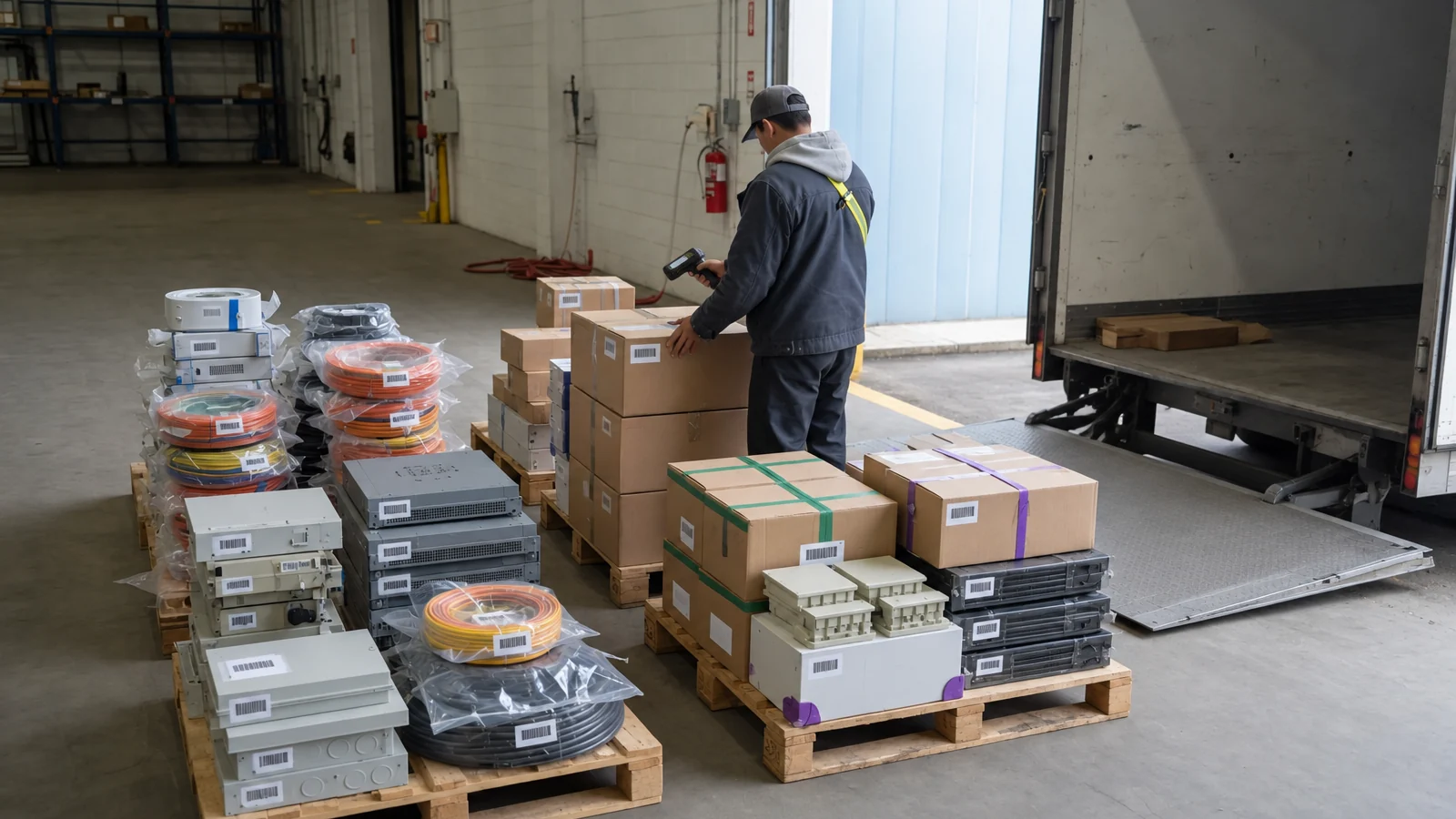
Consolidating for an install means the pieces come together before they reach the site. Each supplier ships to one place. Everything for a site is received and checked against the order there. Only then does it leave, as one delivery, timed to when the crew is ready.
What matters most is where a problem gets found. A missing piece found in a warehouse is a phone call to a supplier. The same missing piece found on site is a lost day.
How it works on a real program
For Ericsson's telecom deployments, equipment from a couple dozen suppliers used to reach each site on different days, and crews waited on incomplete sites. Now the pieces come together in a warehouse first and leave as one delivery. Graham has supported Ericsson's deployments for more than 10 years, and the work started with one in-transit merge.
Questions to ask before you consolidate
- Which suppliers ship pieces for each site, and on what dates?
- Where do the pieces come together, and who checks them against the order?
- When a piece is missing, who calls the supplier, and does the rest wait?
- Is the delivery timed to the crew's window, or to the carrier's schedule?
- Does every site need it, or only the ones where a crew depends on a complete order?
Consolidation isn't right for every shipment. It adds a stop and some time. It earns its place where a crew, a lift or an opening date depends on the order being complete.
Read the Ericsson program story
More on: Technology and telecom · Industrial and automation · Data centers